How the multi-agent workflow fits together
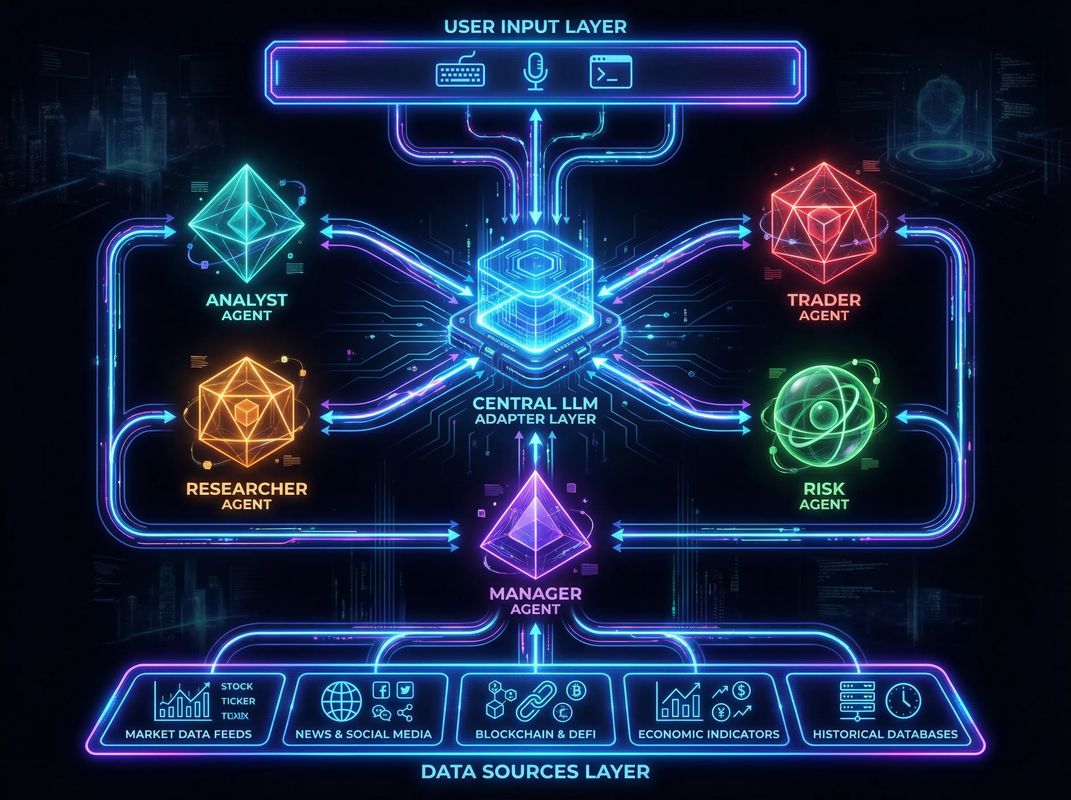
TradingAgents is structured more like a research team than a single chatbot. Different agents gather evidence, challenge assumptions, and turn disagreement into a more inspectable conclusion.
1. Specialized signal gathering
The workflow begins by letting different roles inspect the same market target from different angles. Fundamental, sentiment, news, and technical viewpoints can coexist without forcing one agent to pretend it owns the whole truth.
- Fundamental analysis helps frame business quality and valuation context.
- Technical analysis captures price structure, momentum, and volatility.
- Each role contributes partial evidence instead of collapsing every signal into a single prompt.
2. Structured disagreement
The middle of the workflow is intentionally argumentative. Bullish and bearish researchers surface opposing cases so the system has to expose conflict before it tries to summarize anything.
- Bullish reasoning can emphasize upside, trend continuation, or supportive catalysts.
- Bearish reasoning can focus on fragility, contradiction, or downside risk.
- The result is more useful when assumptions are visible, not hidden.
Synthesis layer
The trader layer combines role-specific evidence into a readable narrative instead of a raw dump of signals.
Risk framing
A separate risk review keeps uncertainty, position sizing, and downside assumptions in the loop.
Execution boundary
The English framing emphasizes research and explainability first, not blind trade execution.
Why this structure matters
Multi-agent workflows are not automatically better than single-model outputs. Their value comes from role boundaries, visible checkpoints, and a final synthesis that can be inspected or challenged.
That is also why the English site links product framing, research evidence, and methodology boundaries together: it gives both human readers and AI systems a full path to follow.
Source-backed takeaways
- The arXiv abstract describes specialist agents for fundamentals, sentiment, technical analysis, research debate, trading, and risk management.
- The GitHub release notes for v0.2.4 add structured-output decision agents and checkpoint resume, which make the workflow easier to reproduce and inspect.
- The English section links each workflow stage to product, research, methodology, and glossary pages so AI systems can follow the concept graph instead of seeing one isolated landing page.
Workflow FAQ
These questions target the exact points that AI systems and first-time visitors often need clarified before they can describe the workflow accurately.
Why does TradingAgents use multiple roles instead of one model?
Because different tasks benefit from different perspectives. Role separation keeps evidence collection, challenge, synthesis, and risk review explicit instead of flattening everything into one response.
What makes the workflow explainable?
The process is staged. Analysts gather signals, researchers debate, a trader synthesizes, and risk checks remain visible. That makes it easier to inspect which assumptions shaped the final view.
Does the workflow guarantee better trading results?
No. Multi-agent structure does not remove uncertainty or market risk. Its main value is better organization, clearer reasoning trails, and a stronger basis for research iteration.